
Effective house cleaning isn’t about scrubbing harder or spending more hours on your hands and knees. It’s about using the right method for the right surface at the right time. Ineffective cleaning – working bottom-up, using acidic solutions on stone, or dry-sweeping fine dust back into the air – wastes time and can damage your property.
At Mr Meticulous, we’ve seen firsthand how professional cleaning techniques protect finishes, pass inspections, and make a huge difference in how a whole house presents. Whether you’re a homeowner maintaining your space or a property manager preparing for handover, these seven proven cleaning tips will save you time and deliver noticeably better results.
How We Chose the Best Cleaning Tips
We evaluated every method against five practical criteria drawn from professional cleaning experience:
- Time efficiency – Does it cut cleaning time compared to standard approaches?
- Effectiveness – Does it actually remove dirt, bacteria, built up grime, and allergens?
- Surface suitability – Is it safe for different materials like natural stone, glass, and timber?
- Cost-effectiveness – Can you do it with affordable tools and cleaning products?
- Safety – Does it protect both the user and the surface from damage?
These aren’t theoretical benchmarks. They reflect what actually matters when you’re cleaning a property that needs to look its best – whether for daily living, a rental inspection, or a construction handover.
Top 7 Professional Cleaning Tips for Homeowners
1. The Two-Minute Rule
If a cleaning task takes two minutes or less, do it now. Wipe down a counter, put dirty dishes in the dishwasher, hang up a jacket. The Two-Minute Rule helps prevent clutter buildup by stopping small messes from snowballing into weekend-consuming marathons.
Why It Stands Out
The Two-Minute Rule helps maintain a tidy home because it targets the root cause of most mess: procrastination on small tasks. Maintaining a tidy home often requires short, consistent daily tasks rather than occasional deep cleaning blitzes. Daily routines help maintain a tidy home without the dread.
Best For
Busy homeowners and families managing high touch surfaces, entryways, and kitchens where small messes appear constantly.
Key Strengths
- Prevents overwhelming cleaning sessions
- Maintains consistent tidiness with minimal effort
- Reduces time spent on deep cleaning later
- Use the one-touch rule alongside it to control clutter – handle mail, keys, and bags once instead of moving them repeatedly
- Assign every item a designated place to make cleaning faster
Possible Limitations
- Requires discipline and habit formation
- Won’t address larger projects like scrubbing grout or cleaning glass on balconies – those need dedicated time
2. Top-to-Bottom Cleaning Strategy
Always clean from the highest point to the lowest. Start with ceiling fans, then light fixtures, shelves, counters, skirting boards, and finally mop floors. This prevents dust and debris from falling onto surfaces you’ve already cleaned.
Why It Stands Out
Cleaning from top to bottom prevents re cleaning areas – a principle used in hospitals, professional home cleans, and post-construction cleaning phases. It’s the single most effective way to structure any deep cleaning session.
Best For
Thorough deep cleaning sessions, post-renovation cleanup, and regular weekly cleans across the whole property.
Key Strengths
- Eliminates the need to re-clean lower surfaces after dislodging dust above
- More efficient use of cleaning time – one pass per surface
- Ensures thorough coverage including fan blades, hard to reach places, and corners
When you remove dust from ceiling fans and light fixtures first, it settles downward where you haven’t cleaned yet. Then you work your way through shelves, windowsills, and finally mop floors last. Also worth noting: dusting and vacuuming should occur regularly in homes to reduce allergens, and changing bed sheets weekly reduces dust accumulation significantly.

Possible Limitations
- Requires planning and organization
- May need ladders or extension poles for high areas in properties with tall ceilings
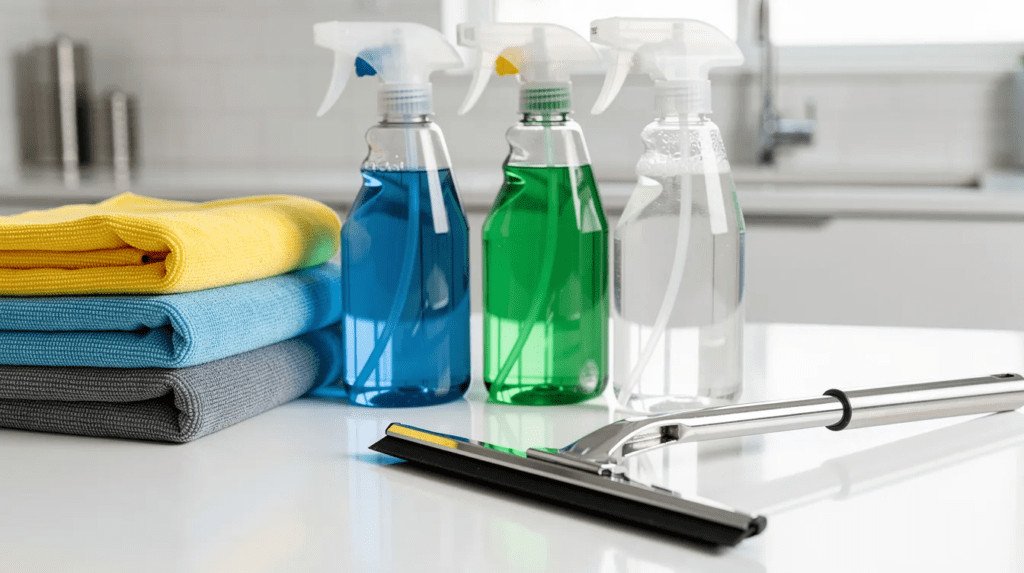
3. Microfiber Magic Method
Replace your feather duster and cotton rags with quality microfiber cloths. The split synthetic fibres trap dust, bacteria, and fine particles at a microscopic level – studies show microfiber removes 98-99% of bacteria with water alone, compared to just 30-40% with cotton.
Why It Stands Out
A single damp cloth made of microfibre cloth material captures and holds particles instead of pushing them around. Using microfiber cloths can prevent scratches on delicate surfaces like stainless steel appliances and glass panels. You can lightly dampen the cloth with just warm water and skip harsh chemicals entirely.
Best For
Streak-free cleaning on glass, polished surfaces, cabinetry, and anywhere you need to remove dust and trap dust without leaving residue behind. Also excellent for tackling pet hair on upholstery – though a lint roller works better on clothing and fabric.
Key Strengths
- Traps dirt at a microscopic level rather than redistributing it
- Works effectively with minimal water – no need for heavy cleaning products
- Reusable and environmentally friendly
- Dust blinds easily using kitchen tongs and microfiber cloths wrapped around each arm of the tongs
- Helps avoid cross contamination when you use separate cloths for kitchen, bathroom, and living areas
Possible Limitations
- Wash microfiber cloths in the machine to maintain effectiveness, but never use fabric softener – it clogs the fibres and kills their cleaning power
- Initial investment in quality cloths pays off but costs more than a paper towel
4. Vinegar and Baking Soda Power Duo
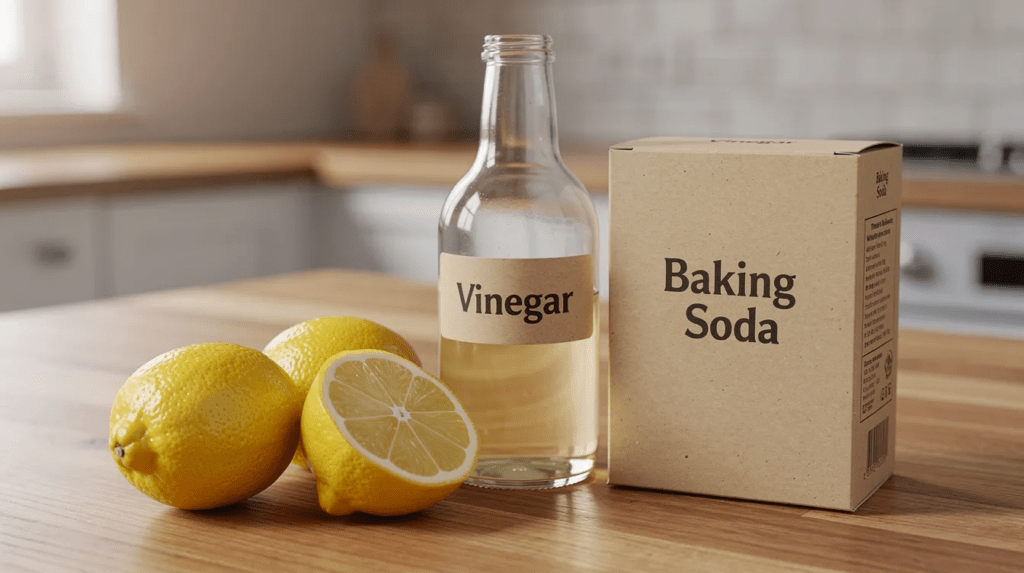
Vinegar and baking soda are effective natural cleaners that handle different jobs through different chemistry. White vinegar (acetic acid) dissolves mineral deposits and cuts through soap scum. Baking soda – also called bicarb soda – is a mild abrasive and alkaline agent that tackles stain removal and odours.
Why It Stands Out
Vinegar and baking soda effectively tackle tough stains without the toxicity of commercial alternatives. Use vinegar to remove hard water spots from taps and shower heads. Vinegar can remove hard water spots effectively when applied undiluted or as a soak. A 1:1 vinegar and water solution cleans windows beautifully when applied with a spray bottle and wiped with a lint free cloth or dry microfibre cloth.
Baking soda deodorises carpets and freshens linens – sprinkle it on, wait 15 minutes, then vacuum. It can also absorb odours in fridges. For an extra boost, add a few drops of essential oil to baking soda before sprinkling.
For kitchens, lemon juice can neutralise odours in waste disposals – the citric acid also helps break down grease. Clean your microwave with a lemon steam bath: place lemon juice and hot water in a microwave safe bowl, heat for three minutes, then wipe the interior with a clean cloth. You can quickly scrub stubborn spots with soapy water afterward.
Important caveat: Never use vinegar on natural stone surfaces like granite, marble, or travertine. The acid etches and dulls the finish. Repair costs for damaged stone countertops can reach AUD $2,000–$4,500. Use pH-neutral cleaners on stone instead.
Also worth noting: disinfect sponges in the microwave for one minute to kill bacteria on your kitchen sponge. Soak dish sponges in the microwave for 1-2 minutes to disinfect them properly. But remember, vinegar is not a registered disinfectant – use a real disinfectant according to dwell time instructions to kill germs on surfaces that need proper sanitisation.
Coffee grounds placed in a small dish can absorb odours in enclosed spaces, and a touch of baby oil on a paper towel buffs stainless steel to a streak-free shine. For unpleasant odour on fabrics, a paste of warm soapy water and bicarb soda works well. Shaving cream, surprisingly, also works as a quick spot cleaner on upholstery and mirrors – apply, wait a few minutes, and wipe.
Best For
Eco-conscious homeowners tackling bathroom grime, kitchen grease, and deodorising tasks on non-stone surfaces.
Key Strengths
- Safe for most surfaces (tile, laminate, glass, porcelain)
- Excellent deodorizing properties
- Cost-effective alternative to commercial cleaners
Possible Limitations
- Not suitable for natural stone, unsealed grout, or polished metals
- Requires preparation time – and never mix vinegar and baking soda together (they neutralise each other)
5. 15-Minute Speed Cleaning
Set a timer. Focus on the highest-impact areas first: kitchen benches, bathroom vanity, living room surfaces, then floors. Professional cleaners report that trained speed cleaning cuts task time nearly in half – a pro cleans a full kitchen in 15-20 minutes versus 35-40 minutes for an untrained homeowner.
Why It Stands Out
Spend 10-15 minutes daily on tidying to maintain cleanliness without burnout. A quick 10-minute tidy-up can help keep spaces clean before bed. A structured routine helps maintain cleanliness without burnout, and creating a chore schedule spreads tasks throughout the week so no single day feels overwhelming.
Put on music or podcasts to make cleaning more enjoyable – it keeps momentum going. Tackle dirty dishes, wipe counters, fold clean clothes, and put away items from high traffic areas.
Best For
Busy schedules and quick touch-ups before guests arrive. Also useful for property managers needing a cleaning routine that keeps rental units presentable between tenancies.
Key Strengths
- Targets high-impact areas first for visible results in a few minutes
- Prevents cleaning overwhelm
- Maintains cleanliness between deep cleans
Possible Limitations
- Doesn’t replace thorough deep cleaning
- Requires prioritization – you’ll need to decide what matters most
6. Declutter-First Approach
Declutter before you clean to save time. Removing loose items, packaging, and clutter before you pick up a cloth makes every subsequent cleaning task faster and more effective.
Why It Stands Out
On construction sites, the rough clean phase always begins with debris removal before any detailed wiping starts. The same principle applies at home. Regular decluttering reduces the need for organizing and cleaning later. Create a dedicated landing zone for frequently used items to prevent clutter from accumulating on benches and tables.
Seasonal cleaning tasks should include decluttering wardrobes and cleaning carpets. Use baskets to manage paperwork in a more organized manner, and use baskets for quick decluttering in common areas. Remove expired food from the fridge and pantry. Clear tight spaces like drawer interiors and under-sink areas.
Household members should be involved in cleaning to distribute workload. Delegate cleaning tasks to all household members for efficiency – even children can handle age-appropriate tasks. The 20-minute rule helps prevent mess accumulation: set 20 minutes daily where everyone tidies their own areas.
Best For
Cluttered spaces, pre-renovation preparation, and thorough regular cleaning sessions.
Key Strengths
- Improves cleaning efficiency significantly
- Prevents items from getting damaged during cleaning
- Creates lasting organizational benefits – you clean surfaces rather than working around obstacles
Possible Limitations
- Requires decision-making about what to keep, toss, or donate
- May extend initial cleaning time before you see sparkling results
7. Professional Squeegee Technique
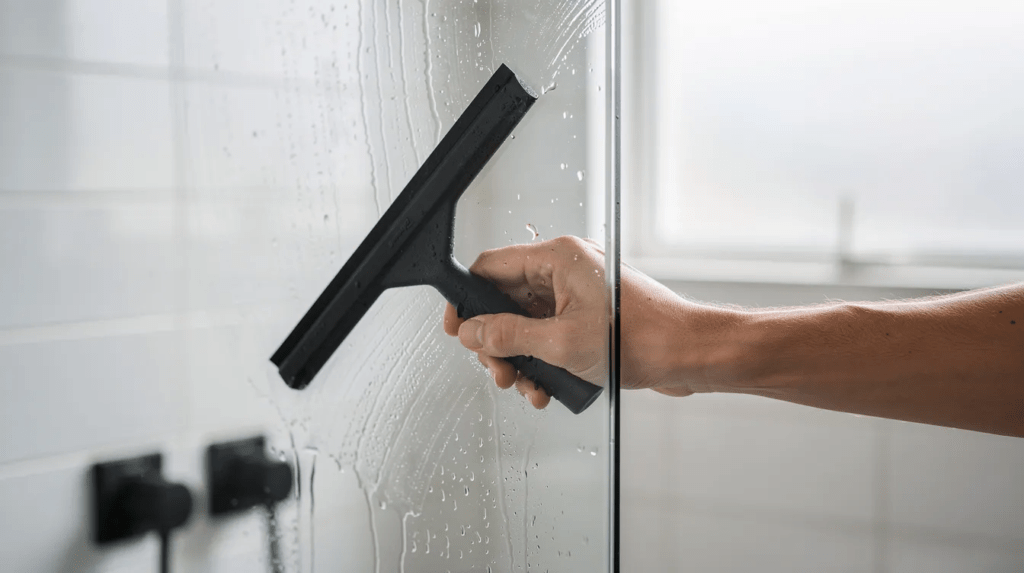
Use a squeegee to prevent hard water stains on shower screens, glass panels, and mirrors. A 30-second squeegee pass after each shower prevents the mineral buildup that otherwise requires heavy scrubbing with dish soap or chemical removers.
Why It Stands Out
This is prevention over cure. Hard water stains, soap scum, and mineral deposits form when water evaporates on glass, leaving residue behind. A squeegee removes the water before deposits can form. For cleaning glass on larger panels, use an S-pattern technique followed by a wipe with a dry microfibre cloth.
Use liquid soap with warm water on glass first if there’s existing sticky residue or film, then squeegee dry.
Best For
Bathroom maintenance, glass balustrades, and anyone tired of scrubbing shower screens every weekend.
Key Strengths
- Prevents stains rather than removing them
- Keeps surfaces looking professionally clean
- Minimal effort for maximum results – takes seconds per use
Possible Limitations
- Requires daily habit formation
- Not effective on heavily textured glass surfaces
Quick Comparison of the Best Cleaning Tips
| Method | Best For | Time Required | Skill Level |
|---|---|---|---|
| Two-Minute Rule | Maintaining daily tidiness | Seconds per task | Beginner |
| Top-to-Bottom Strategy | Thorough deep cleaning | 1-3 hours per session | Intermediate |
| Microfiber Method | Streak-free, professional results | Varies | Beginner |
| Vinegar & Baking Soda | Natural, chemical-free cleaning | 10-30 minutes per task | Beginner |
| Speed Cleaning | Busy lifestyles, quick touch-ups | 10-15 minutes | Beginner |
| Declutter-First | Cluttered spaces, major projects | 20-60 minutes setup | Beginner |
| Squeegee Technique | Preventing bathroom/glass stains | 30 seconds per use | Beginner |
How to Choose the Right Cleaning Approach
Choose Based on Available Time
If you have a few minutes, use the Two-Minute Rule or Speed Cleaning to handle what’s visible. If you have a full morning, commit to the Top-to-Bottom Strategy for a proper deep cleaning session. Create a chore schedule to manage cleaning tasks so you’re not trying to do everything at once.
Wipe spills immediately to maintain clean surfaces – this applies regardless of which method you favour. Clean carpets at least once a week and treat spills immediately to prevent damage to fibres and backing.
Choose Based on Cleaning Goals
For regular maintenance, Speed Cleaning and the Two-Minute Rule keep things manageable. For deep cleaning, combine Declutter-First with Top-to-Bottom. Utilize surface-specific cleaning products for effective results – don’t use all-purpose sprays on hardwood floors or stone benchtops.
Deep clean appliances and wash windows monthly. Replace mop heads every three months for optimal performance. Check vacuum filters regularly and clean to maintain suction power – use the appropriate attachment for different surfaces. Run a hot wash in your washing machine monthly to eliminate bacteria, and wash your cleaning cloths on a hot cycle to keep them hygienic.
For pet dander and dust mites, regular vacuuming with a HEPA-filtered vacuum makes a measurable difference, especially for allergy sufferers sensitive to mould spores.
Choose Based on Household Needs
Larger families generate more mess in high traffic areas and need distributed responsibilities. Homes with pets benefit from microfiber cloths and a lint roller to manage pet hair and pet dander on furniture.
A magic eraser works well for scuff marks on walls and baseboards that standard cloths miss.
Which Cleaning Tip Is Best for You?
- Choose the Two-Minute Rule if you need daily maintenance habits that prevent mess from building up
- Choose Top-to-Bottom if you want professional deep cleaning results across the whole house
- Choose the Microfiber Method if streak-free surfaces and allergen reduction are your priority
- Choose Vinegar and Baking Soda if you prefer natural, low-cost solutions for kitchen appliances and bathrooms
- Choose Speed Cleaning if you have limited time but want visible results
- Choose Declutter-First if your spaces feel cluttered and cleaning feels chaotic
- Choose the Squeegee Technique if bathroom glass maintenance drives you crazy
The best approach is usually a combination. Use Speed Cleaning daily, Top-to-Bottom weekly, and Declutter-First seasonally for a cleaning routine that actually sustains itself.
Final Thoughts
Effective cleaning depends on choosing the right method for the situation – not just scrubbing harder. These professional techniques work for homeowners and property managers alike, and most require nothing more than basic tools, a bit of knowledge, and consistent habits.
That said, some situations go beyond what any DIY tip can handle. Post-construction sites, major renovation cleanups, and handover-ready properties involve fine silica dust, adhesive removal, grout haze, and surface-safe chemical selection that require trained, insured professionals with the right equipment.